
The 3rd Annual Meeting of the Minds Symposium brought data, decisionmakers, and community together to turn South LA’s challenges into a shared agenda for action.
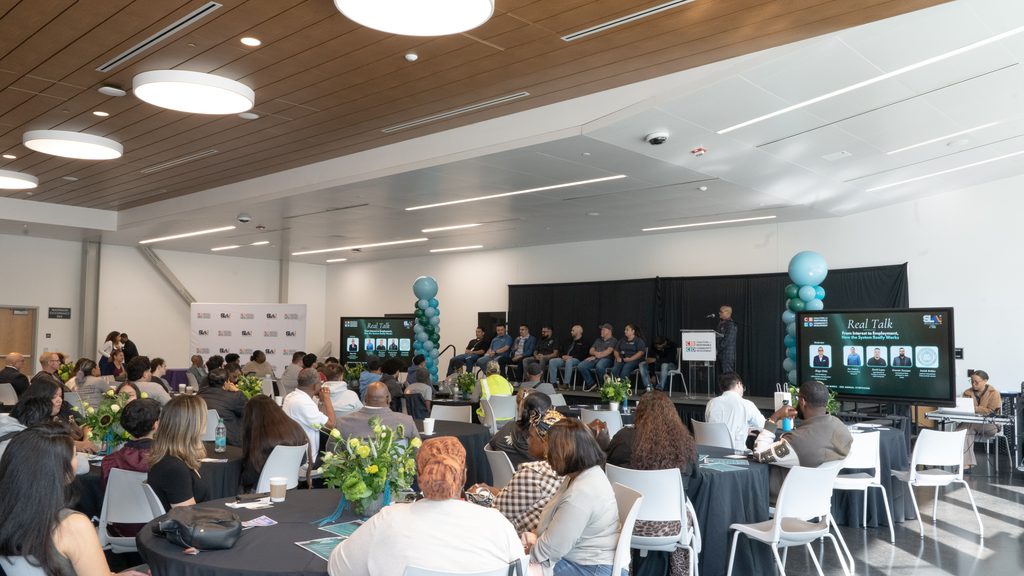
On Thursday, October 29, the Coalition for Responsible Community Development (CRCD) hosted the third annual South LA All In Meeting of the Minds Symposium at Los Angeles Trade-Technical College, as part of its South LA All In (SLAAI) initiative. The event brought together elected officials, nonprofit leaders, workforce development partners, small business owners, educators, and South LA residents to discuss best practices, key data, and innovative solutions to building housing, good jobs, and opportunity in South Los Angeles.
The Meeting of the Minds was created as a space where the leaders, organizers, and community members doing the work in South LA can connect, share what they’re seeing on the ground, and come together around the change they want to see. This year’s conversation centered on housing and employment trends across the last decade, the economic opportunities ahead as Los Angeles prepares for the 2028 Olympics and Paralympics, and the power of intentional partnerships to ensure that South LA residents are not just adjacent to the region’s growth, but central to it.
Where South LA Stands Today: A Data Walk Through The Neighborhood
The symposium was grounded in a data walk presented by Cameron Yap of USC’s Neighborhood Data for Social Change and Jermaine Hampton of the LA County Economic Development Corporation. Together, they examined housing and employment data spanning from 2014 to 2024, offering evidence-based context for some of the key challenges facing South LA residents today, including affordability and access to quality employment. Here is what they found:
On housing supply:
- South LA’s housing stock has a median age of 68 years, a full decade older than the LA County median
- More than 30,000 low-income households and unhoused residents in the SLAAI area lack access to an affordable, available rental home
- Of the nearly 150,000 new rental units built countywide between 2018 and 2025, just 11 percent were affordable to low-income households
On affordability:
- 63 percent of South LA households pay more than 30 percent of their income on rent and utilities, and 35 percent pay more than half
- The median gross rent in the area is approximately $1,500 per month, which means a household would need to earn roughly $30 per hour just to avoid being rent-burdened
- The median household income among South LA renters is $47,000, well below what is needed to reasonably afford housing in the region
On homeownership:
- Countywide homeownership rates sit at 39 percent for Hispanic/Latino households and 33 percent for Black households, compared to the 46 percent county average
- In a region where 97 percent of SLAAI residents are Hispanic/Latino or Black, these disparities carry significant consequences for long-term wealth building and community stability
On good jobs and affordability:
- A single adult in LA County needs $28.92 per hour to cover basic needs, and a single parent needs $50.23 per hour, figures that underscore just how much is riding on access to quality employment
- Construction, clean energy, healthcare, and transportation and logistics are among LA County’s seven priority sectors, with more than 1,500 annual openings projected for electricians and more than 2,300 for carpenters
Taken together, the data tells the story of South LA residents who are working hard in a housing market that was not built to work for them, and the gap between what people earn and what it costs to live keeps growing wider. And at the center of it all is a simple truth: housing is a wage issue, and wages are a jobs issue. The good news is that the jobs are there. Construction, clean energy, healthcare, and the trades are growing, and South LA residents have every reason to be filling those roles. What determines whether they do often comes down to access. Income during training, childcare, transportation, and a real connection to an employer who is ready to hire all make a substantial impact on residents’ employment and housing rates. The data walk closed with a call to everyone in the room: name your hiring needs, align your programs with real demand, and invest in closing the gap between completing a training program and landing a job that actually changes someone’s life.
Community in Conversation
Panel discussions and structured conversations gave participants the opportunity to move from data to dialogue, as community-based organizations, educators, small business owners, and public-sector partners added human experience and institutional perspective to what the numbers had shown. The conversations that followed reinforced the themes running through the morning: that stable wages and stable housing are inseparable, that workforce pathways have to be built around the realities of South LA residents’ lives rather than industry timelines alone, and that the partnerships needed to move the needle require sustained commitment from every sector in the room.
One panel featuring leaders from the Office of LA County Supervisor Holly Mitchell, the Office of Mayor Karen Bass, and the California Workforce Development Board tackled what defines a good job. Panelists agreed that simply being employed is not enough, and that South LA residents deserve jobs that offer a living wage, benefits, worker protections, genuine opportunities for advancement, and a real pathway toward economic mobility. As this definition becomes more common through forums like this symposium, it raises the bar for what workforce development programs, public contracts, and community partnerships are actually working toward.
Looking ahead, speakers at the Symposium were asked to share concrete actions they could take to advance good jobs for South LA. We committed to:
- Host quarterly Good Jobs roundtables with community organizations, employers, workforce partners, and public agencies to talk through what’s getting in the way of South LA residents accessing good jobs and what we can do together to address it.
- Make it easier for residents to connect to opportunities by strengthening referrals to job readiness support, career training, apprenticeships, and jobs, including opportunities in the skilled trades.
- Follow up with Symposium speakers and partners on the actions they shared and use the quarterly roundtables to check in on progress and agree on next steps.
What This Means for South LA
Each year, the Meeting of the Minds symposium brings together a remarkable cross-section of leaders, partners, and community members who are invested in the future of South Los Angeles. Beyond the data points and panel discussions, what the symposium surfaces is the collective knowledge of people who have been doing this work for decades, showing up because they believe it is worth doing together.
CRCD knows that the true work of community development does not happen in silos, and that the solutions South LA needs will come from sustained, collective action over time. We will continue to convene the people and organizations committed to this work in service of tangible progress and lasting prosperity for our community.
Stay connected with South LA All In at coalitionrcd.org. To get involved with CRCD’s workforce training, housing, and community programs, visit coalitionrcd.org.